Visualizing Trust: How to Use Safe Online Pharmacy Signs Infographics for Health Communication
In the rapidly evolving landscape of digital healthcare, trust is the most valuable currency. As patients increasingly turn to the internet for medications and health consultations, distinguishing between legitimate medical providers and fraudulent entities has become a critical skill. For healthcare organizations, educational institutions, and public health advocates, communicating these safety standards effectively is just as important as the standards themselves. This is where the Safe Online Pharmacy Signs Infographic becomes an essential tool. By transforming complex regulatory guidelines into accessible visual data, these resources bridge the gap between technical compliance and public understanding.
This article explores the significance of safe online pharmacy visualization, how to leverage vector infographic templates for professional presentation, and the strategic importance of clear workflow design in health education. Whether you are designing a patient awareness campaign or creating internal training materials, understanding these elements ensures your message is both accurate and engaging.
The Critical Need for Visual Safety Standards
The proliferation of online pharmacies has brought convenience to millions, but it has also introduced significant risks. Rogue websites often mimic legitimate pharmacies, selling counterfeit medications or bypassing necessary medical oversight. According to global health authorities, a substantial percentage of medicines purchased from unverified online sources may be substandard or falsified. Combatting this issue requires more than just text-heavy warnings; it demands immediate, recognizable visual cues.
Human brains process visual information significantly faster than text. When a patient visits a website or reads a health brochure, they are often scanning for reassurance rather than reading every word. A well-designed infographic utilizing safe online pharmacy signs provides that instant reassurance. It serves as a cognitive shortcut, allowing users to verify legitimacy through familiar symbols such as verified internet pharmacy practice seals, secure connection indicators, and physical address verification badges.
Furthermore, visual standards transcend language barriers. In diverse communities where health literacy varies, icons and color-coded systems can communicate safety protocols more universally than written instructions alone. This inclusivity is vital for public health initiatives aiming to protect vulnerable populations from digital health fraud.
Leveraging Vector Templates for Professional Design
Creating high-quality health communication materials from scratch is resource-intensive. This is why utilizing a safe online pharmacy signs vector infographic template is a best practice for modern designers and health communicators. Vector graphics differ fundamentally from raster images; they are composed of mathematical paths rather than pixels, meaning they can be scaled infinitely without losing quality. This versatility is crucial when the same asset needs to appear on a business card, a website banner, and a large-format poster.
Professional templates typically come in a comprehensive ZIP file containing EPS, JPG, PNG, SVG, and AI formats. Understanding when to use each format is key to maintaining professional integrity:
- AI and EPS: These are source files for Adobe Illustrator and other vector software. They allow for full customization of colors, shapes, and layout, ensuring the infographic aligns perfectly with organizational branding.
- SVG: Scalable Vector Graphics are ideal for web use. They remain crisp on high-resolution mobile screens and have a small file size, which supports page load speed and SEO performance.
- PNG: Best for presentations and documents where transparency is needed. Unlike JPGs, PNGs support transparent backgrounds, allowing safety icons to overlay cleanly onto colored slides or brochures.
- JPG: Useful for quick previews or social media posts where file compatibility is prioritized over editability.
By starting with a vetted template, organizations ensure that the anatomical accuracy of medical icons and the regulatory correctness of safety signs are maintained, reducing the risk of inadvertently using misleading imagery.
Integrating Doctor’s Prescription Presentation Elements
A safe online pharmacy does not exist in a vacuum; it is intrinsically linked to valid medical authorization. Therefore, effective infographics must incorporate doctor’s prescription presentation design elements. These elements visually reinforce the legal and ethical requirement that prescription medications must only be dispensed following a legitimate consultation.
Design elements in this category often include stylized representations of electronic prescriptions (e-prescriptions), digital signature blocks, and telehealth interface mockups. These visuals serve a dual purpose. First, they educate the consumer on what a valid digital prescription looks like, helping them spot forged documents. Second, they legitimize the pharmacy by associating it directly with licensed medical professionals.
When designing these sections, clarity is paramount. Avoid cluttered depictions of medical charts. Instead, focus on clean, linear iconography that highlights key security features, such as encryption locks on prescription portals or verification checkmarks next to doctor credentials. This subtle visual association builds a narrative of safety that flows from the prescriber to the dispenser to the patient.
Data Visualization: The 4-Step Verification Process
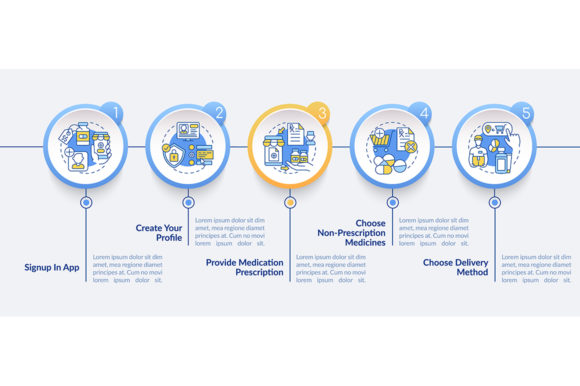
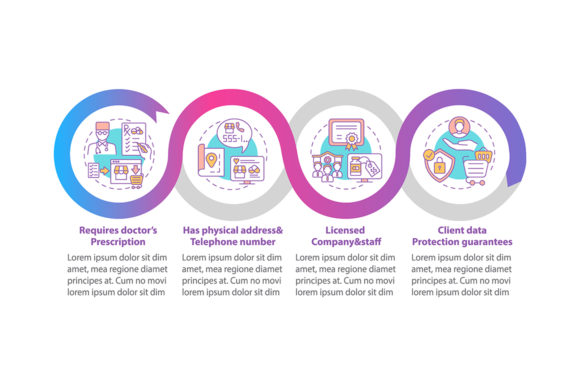
Complex safety protocols are best understood when broken down into manageable chunks. Data visualization with 4 steps is a proven framework for teaching consumers how to verify an online pharmacy. This structure prevents cognitive overload while providing a complete actionable guide. A typical four-step workflow might include:
- Verify Credentials: Check for state board licensure and national accreditation seals.
- Confirm Contact Information: Ensure a physical address and licensed pharmacist phone number are listed.
- Validate Prescription Requirement: Confirm that the site requires a valid prescription from a healthcare provider.
- Assess Security: Look for HTTPS encryption and secure payment gateways.
Visually, this is often represented through numbered circles, connecting lines, or a quadrant layout. Each step should be paired with a distinct icon and a concise label. This method transforms abstract advice into a concrete checklist. For content creators, this structured approach also enhances SEO, as search engines favor content that organizes information logically and answers user queries comprehensively.
Workflow Layouts and Linear Icons
The aesthetic choice of workflow layout with linear icons is particularly effective in healthcare design. Linear icons, characterized by their thin strokes and open shapes, convey a sense of precision, cleanliness, and modernity. In the context of pharmacy safety, these attributes subconsciously signal sterility and professionalism, contrasting sharply with the chaotic or deceptive aesthetics of rogue sites.
A linear workflow layout guides the viewer’s eye naturally across the infographic. Unlike circular or radial layouts which can sometimes imply a continuous cycle, linear layouts suggest progression and completion. This is psychologically appropriate for safety verification; it implies that once the steps are followed, the user reaches a definitive conclusion regarding the pharmacy's safety.
When implementing these layouts, consistency is vital. All icons should share the same stroke weight, corner radius, and stylistic treatment. Mixing filled icons with outline icons can create visual dissonance that undermines the perceived professionalism of the material. Using a unified vector template ensures this consistency is baked in from the start.
Process Timeline Charts for Educational Context
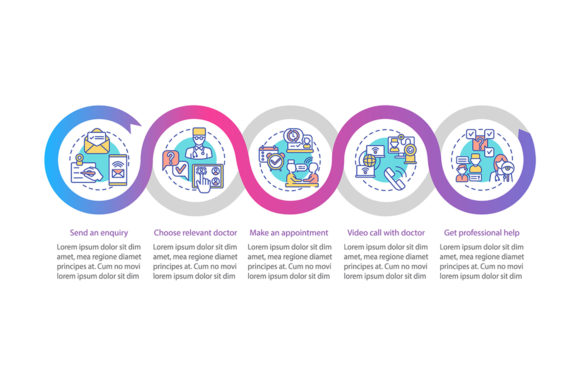
While verification steps are static, the journey of obtaining medication safely is dynamic. A process timeline chart adds temporal context to the infographic. This visualization maps out the expected duration and sequence of a legitimate online pharmacy transaction, from initial consultation to final delivery.
Timelines help manage patient expectations and identify red flags. For example, if a timeline shows that legitimate shipping takes 3–5 business days, a site promising "instant delivery" of controlled substances immediately stands out as suspicious. Timelines can also illustrate the lifecycle of a prescription, showing when refills are authorized and when re-evaluation by a doctor is necessary.
In educational settings, timeline charts are invaluable for training new pharmacists or customer service representatives. They provide a visual standard operating procedure (SOP) that reinforces compliance at every stage of the digital dispensing process.
Practical Applications Across Sectors
The utility of these design assets extends far beyond simple awareness posters. In business, pharmaceutical companies use them in B2B marketing to demonstrate compliance to partners and insurers. In education, nursing and pharmacy schools integrate these infographics into digital literacy curricula, preparing future professionals to navigate the e-health landscape responsibly.
For content creators and bloggers, embedding these infographics increases dwell time and shareability. Visual content is more likely to be pinned on Pinterest or shared on LinkedIn, driving organic traffic back to authoritative health articles. Moreover, providing downloadable resources (like the mentioned ZIP files) can serve as a lead magnet for newsletters focused on patient safety.
Common Misunderstandings in Digital Pharmacy Safety
Even with excellent visuals, misconceptions persist. One common assumption is that a professional-looking website equals a safe pharmacy. Infographics must explicitly counter this by highlighting that design quality is not a safety indicator; only verifiable credentials are. Another misunderstanding is that ".pharmacy" domains are automatically safe. While helpful, they must be cross-referenced with other verification steps.
Effective infographics address these nuances directly. They do not just show what to look for; they often include "myth vs. fact" sections or warning callouts that debunk prevalent myths. This proactive approach to misinformation is what elevates a graphic from mere decoration to a genuine public health intervention.
Building a Broader Understanding of Digital Health Literacy
Ultimately, the goal of using Safe Online Pharmacy Signs Infographics is to foster digital health literacy. It is about empowering individuals to navigate the intersection of technology and medicine with confidence. By combining rigorous data visualization, professional vector design, and clear educational narratives, we create resources that do more than inform—they protect.
As telemedicine and e-pharmacy services continue to expand, the visual language of safety will evolve. Staying current with design trends and regulatory updates ensures that our communication remains relevant. Whether you are utilizing a pre-made template or commissioning custom work, remember that every line, icon, and color choice contributes to a larger ecosystem of trust. In the digital age, good design is not just about aesthetics; it is a fundamental component of patient safety.